

The Circular Spice Table: How Your Visit Rebuilds Grenada's Local Food Sovereignty
How Your Visit Rebuilds Grenada's Local Food Sovereignty
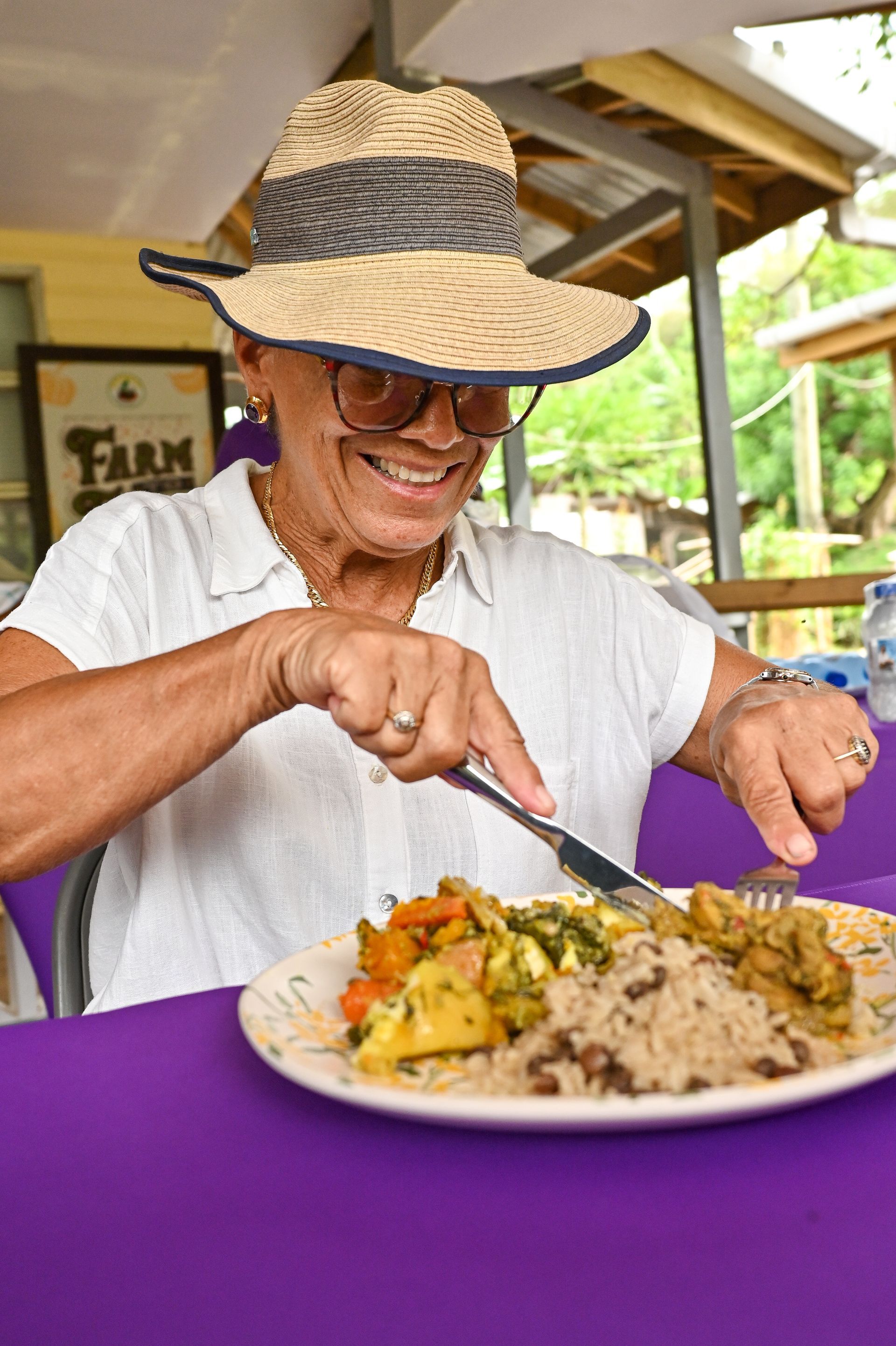
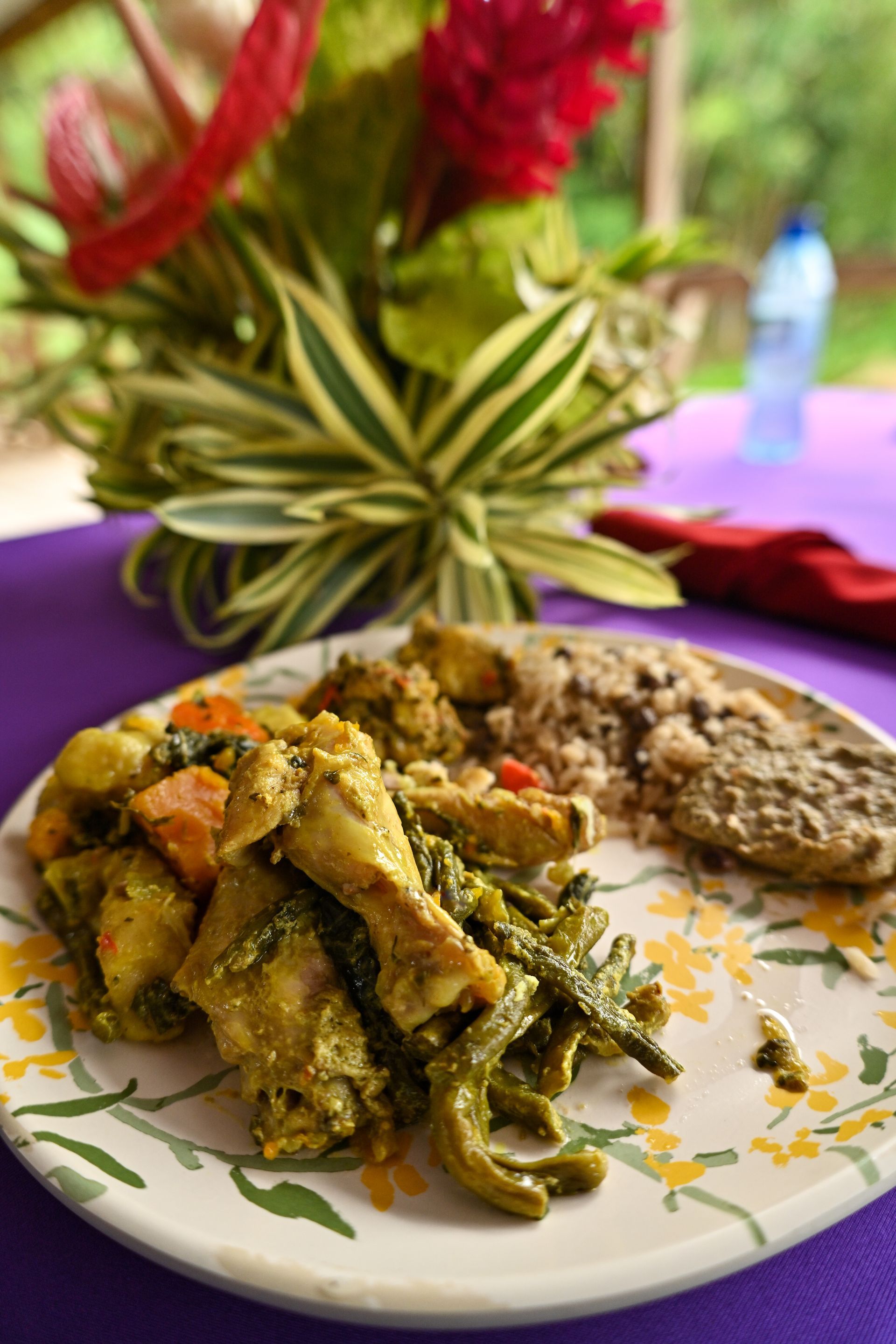
There is a phrase Anne Campbell uses when she talks about what Caribbean Horizons does in Grenada's spice communities: "We don't just show you the nutmeg. We support the soil it grows in."
It is a small distinction that carries significant weight. Tour operators across the Caribbean will take you to a spice plantation. Very few of them have built a relationship with a farm cooperative that has become a working model for 27 countries across the Caribbean — or with a host like Theresa, who will hand you a freshly pulled yam and explain exactly what the soil it came from is worth.
This is the third part of Caribbean Horizons' Earth Month story — and the one that begins where the others end. The turtles are protected at the shore. The dunes are stabilized by 500 trees. The land itself — Grenada's farming interior — is sustained by what happens at the table.
"We don't just show you the nutmeg. We support the soil it grows in." — Anne McIntyre, Caribbean Horizons
The Soil-to-Soul Traveler: Why Agricultural Tourism Is the Fastest-Growing Segment in 2026
The traveler searching for "farm-to-table travel" or "agricultural tourism" in 2026 is not looking for a cooking class. They are asking a harder question: does the food on my plate represent a supply chain that is fair, local, and climate-resilient — or am I eating the same imported provisions my resort uses, dressed up in a rustic setting?
Food sovereignty — the right of communities to define their own food systems rather than depend on imported supply chains — is increasingly central to how conscious travelers evaluate a destination. For Grenada, an island that grows nutmeg, cinnamon, cocoa, turmeric, breadfruit, callaloo, yams, and coconut in its own soil, this is not an abstract policy principle. It is the daily economic reality of the farming families working the island's interior parishes.
Caribbean Horizons' culinary farm tour positions Grenada not just as a place to taste local food, but as a working model of what a low-carbon, locally sovereign food system looks like — and what it takes to keep it thriving.
Meet Theresa: The Woman Behind Grenada's Most Successful Farming Cooperative
Theresa is not a chef who sources locally. She is a farmer who cooks — and the distinction matters. Her open-air kitchen sits at the center of a working farm cooperative that supplies produce to hotels and restaurants across Grenada, produces virgin coconut oil for hotel spas, and has become recognized by the UNDP and the Sandals Foundation as a model for Caribbean agricultural development.
When you arrive at Theresa's farm, the vegetables you will cook with were growing in the surrounding fields that morning. The callaloo, the yams, the spinach, the breadfruit, the coconut — none of it traveled more than a few hundred feet from soil to pot. The herbs and spices came from the same ground. The open fire is fueled by coconut shells from the same trees.
This is not farm-to-table as a marketing concept. This is farm-to-table as the only way Theresa has ever known how to cook.
The vegetables you cook with were growing in the surrounding fields that morning. The coconut shells fueling the fire came from the same trees.
The National Dish: What Oil Down Actually Teaches You About Grenada
Oil Down is Grenada's national dish and one of the most instructive meals a traveler can learn to make. It is a one-pot dish built entirely from ingredients that can be and historically were grown on the island: breadfruit, callaloo, leafy greens, yams, coconut milk, turmeric, and herbs layered in a specific sequence — what Grenadians call "packing the pot."
Theresa walks guests through every layer: the structural base of starchy ground provisions, the greens that wilt into the pot as moisture builds, the coconut milk that gives the dish its name as it absorbs into the ingredients during the slow cook. Each ingredient has a health benefit she explains as it goes in. Each one has a cultural story attached to it — the breadfruit that arrived with colonial trade, the callaloo that traces back to West African cooking traditions, the spices that made Grenada the most valuable island in the Caribbean for two centuries.
By the time the pot is done, you have not just cooked a meal. You have a working understanding of Grenadian history, agriculture, and identity — served warm, straight from the fire.
The Lowest-Carbon Meal You Will Eat on Your Entire Trip
The carbon footprint of a meal is determined primarily by two factors: how far the ingredients traveled and how they were cooked. On both measures, Theresa's farm kitchen operates at a level that most farm-to-table restaurants in New York or London cannot come close to matching.
Zero food miles. Every vegetable and herb used in the meal was grown on the surrounding farm. Dasheen, breadfruit, yams, eggplant, callaloo, coconut — all produced on-site, harvested the same day, with no cold chain, no packaging, and no freight. The farm's own irrigation system and crop rotation practices mean the soil requires no imported fertilizers to produce this yield season after season.
Carbon-negative cooking. The open fire is fueled by coconut shells — agricultural byproduct from the same trees producing the coconut milk in the pot. Coconut shells are carbon that has already been sequestered by the tree during its growth. Using them as fuel completes the agricultural cycle rather than adding to it. There is no gas line. No electric stove. No imported fuel source.
A self-sustaining water system. The farm operates its own water supply and irrigation system — independent of municipal infrastructure. This water sovereignty is one of the markers of genuine food system resilience, and one of the reasons this cooperative has been recognized as a model for replication across the Caribbean.
A Model for 27 Countries: The Cooperative That Changed Caribbean Agriculture
What makes Theresa's operation exceptional is not just what happens on her farm. It is what her farm has made possible beyond it.
The island-wide cooperative she leads has become a recognized model for sustainable agricultural development across 27 Caribbean countries. Supported by grants from the Sandals Foundation and the UNDP, the cooperative's executive team develops educational courses, organizes field trips for cooperative members, and writes successful funding proposals for agricultural supplies and infrastructure. What started as a produce cooperative supplying hotels and restaurants has expanded into virgin coconut oil production for hotel spas — and now, eco-tourism.
Share This Post
Read More